Sod Installation in Markham
Fresh Kentucky bluegrass sod, properly graded and installed by a local crew that knows Markham soil.
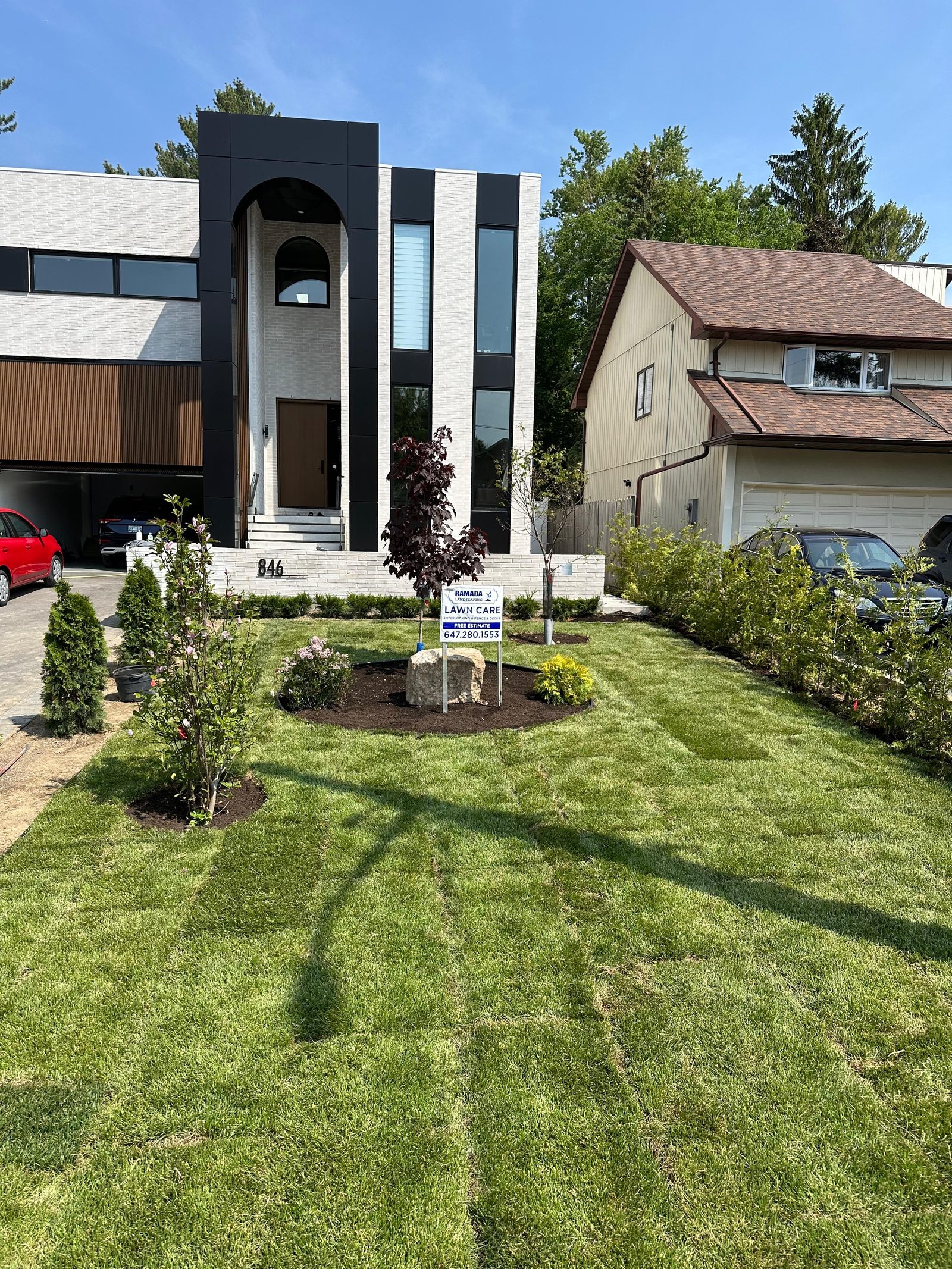
A new lawn is one of the fastest ways to change the look of a property, but the sod itself is only part of the job. How the soil underneath is prepared determines whether that lawn thrives for years or struggles from the first summer. Ramada Landscaping installs sod across Markham, Richmond Hill, Vaughan, and Scarborough with the grading, soil amendment, and aftercare guidance that make the difference.
Kentucky Bluegrass: The Standard for Ontario Lawns
Most of the sod we install is Kentucky bluegrass, or a bluegrass-fescue blend, because it is the variety best suited to Ontario's climate. It handles our winters, tolerates the freeze-thaw cycles of a GTA spring, and forms a dense, self-repairing turf that fills in minor damage on its own. It also has the deep green colour and fine texture most homeowners picture when they imagine a healthy lawn.
Sod vs. Seed
Seed is less expensive up front, but it takes weeks to germinate, is vulnerable to birds, heavy rain, and foot traffic while establishing, and leaves bare or patchy soil exposed to erosion and weeds in the meantime. Sod is mature grass, already rooted in a thin layer of soil, so it gives you a usable lawn within a couple of weeks of watering rather than a full growing season. For most residential properties in Markham, especially where the yard will see kids, pets, or entertaining shortly after installation, sod is the more practical choice.
Our Installation Process
1. Site Assessment & Grading
We start by evaluating drainage and grade. The soil is graded to slope gently away from your foundation, eliminating low spots that pool water and high spots that dry out too fast.
2. Soil Preparation
Old grass, debris, and rocks are cleared. We till and amend the existing soil with triple mix or topsoil as needed so the sod's roots have something worth growing into, not compacted clay.
3. Sod Delivery & Laying
Fresh-cut sod is delivered and installed the same day to avoid drying out. Rolls are laid in a brick-pattern, staggered joints, tight seams, and trimmed cleanly along beds, walkways, and driveways.
4. First Watering & Rolling
The new lawn is rolled to press roots into the soil and eliminate air pockets, then given its first deep watering before we leave the site.
Best Time to Install Sod in Ontario
Spring and early fall are the two windows we recommend. Cool, moist conditions in April-May and September-early October let new sod establish roots without the stress of peak summer heat. Sod can be installed in summer, but it demands more frequent watering to survive the higher temperatures. We advise against sod installation in the heat of July and August unless an irrigation system is already in place.
Watering Schedule for New Sod
New sod needs consistent moisture while its roots knit into the soil beneath it. As a general guideline:
- Days 1-14: Water daily, enough to keep the sod and top few centimetres of soil consistently moist. This is the critical rooting period.
- Weeks 3-4: Begin tapering to every second day, encouraging roots to grow deeper in search of moisture.
- Week 5 onward: Move to a normal established-lawn schedule, roughly 2-3 deep waterings per week rather than daily light watering.
Avoid mowing until the sod is rooted firmly enough that it doesn't shift underfoot, typically two to three weeks after installation.
Pricing
Sod installation typically runs $2-4 per square foot installed, depending on lawn size, grading required, soil condition, and site access. Larger, simpler areas cost less per square foot than small or heavily obstructed yards. We provide a firm written quote after an on-site visit, no obligation.
Frequently Asked Questions
How long does it take for new sod to root?
New sod typically develops enough root structure to resist light tugging within 2-3 weeks under proper watering. Full establishment, where the lawn can handle normal foot traffic and mowing without stress, generally takes 4-6 weeks.
Can I install sod myself instead of hiring a crew?
You can, but grading is the part most DIY installs get wrong. Improper grading leads to drainage problems, dead patches, and standing water near the foundation that surface months later. Professional grading and same-day sod laying reduces the risk of a lawn that fails within the first season.
Do I need an irrigation system for new sod to survive?
Not necessarily, manual or hose-end watering works if you're consistent with the schedule above. That said, an irrigation system removes the guesswork and is especially useful if you travel or install sod during a hot stretch. See our irrigation services for options.
What's the difference between sod and artificial turf?
Sod is real, living grass that requires watering, mowing, and seasonal care but offers a natural look and feel. Artificial turf needs no watering or mowing and stays green year-round, but has a higher upfront cost. If low maintenance is the priority, our artificial turf page covers that option in detail.
Already have a lawn and just need it kept healthy? See our lawn maintenance services for mowing, fertilization, and aeration programs.